
Gas cookers are widely used in London homes, but many people are unsure about the correct and legal way to install them. Searches like how to fit a gas cooker, how to install a gas cooker UK, or gas cooker installation regulations usually come from confusion about what is allowed and what must be done by a professional.
The simple answer is that while you can position and prepare the appliance yourself, the final connection to the gas supply must be carried out by a certified Gas Safe engineer under UK law. This ensures the installation is safe, legal, and fully tested before use.
This guide explains everything clearly so you understand how gas cooker installation works in London, what you can do yourself, and where professional help is required.
Why Gas Cooker Installation in London Is Regulated by Law
Under the Gas Safety (Installation and Use) Regulations 1998, any gas cooker fitting, fitting gas cookers, or gas oven fitting regulations related task that connects the appliance to the supply must be carried out by an engineer listed on the Gas Safe Register.
This applies across every borough, including gas installation City of London properties.
Incorrect connection can cause:
- Gas leaks behind the cooker
- Fire and explosion risk
- Carbon monoxide exposure
- Invalid home insurance
- Legal consequences for unsafe work
What You Can Do vs What a Gas Safe Engineer Must Do
| Task | You Can Do | Gas Safe Engineer Only |
|---|---|---|
| Measure the cooker space | Yes | No |
| Move the cooker into position | Yes | No |
| Ensure ventilation gap | Yes | No |
| Connect hose to gas supply | No | Yes |
| Install stability chain | No | Yes |
| Perform gas leak test | No | Yes |
| Test burner pressure & flame | No | Yes |
| Confirm legal compliance | No | Yes |
Positioning the appliance is allowed. Connecting a gas cooker in London is not.
Common Gas Cooker Connection Types in London Homes
Understanding your setup helps explain why gas cooker bayonet fitting regulations and gas hob installation regs exist.
Bayonet Hose Connection
Most flats use this. A flexible hose locks into a wall socket. This is where gas cooker connection mistakes are common.
Rigid Copper Pipe Setup
Older homes often require pipework adjustment to meet gas cooker fitting regulations.
Stability Chain Requirement
Part of regulations for gas cooker installation and gas hob regulations for installing to prevent tipping.
Clearance and Ventilation Rules
Covered under gas hob installation regulations and regulations gas hob installation for safe airflow.
Step-by-Step: How Professionals Connect a Gas Cooker in London
This is the correct process for installing a gas cooker regulations compliant way.
Step 1 – Safety Inspection
- Check gas pipe condition
- Check isolation valve
- Check ventilation space
- Confirm cooker compatibility
Step 2 – Preparing the Connection
- Remove old hose or fittings
- Install new approved gas hose or pipe
Step 3 – Connecting the Gas Cooker
- Hose connected to bayonet socket
- Stability chain secured
- Cooker levelled correctly
Step 4 – Tightness and Leak Testing
Mandatory for gas cooker installation regs compliance.
Step 5 – Burner and Oven Testing
- Blue stable flame check
- Ignition check
- Pressure stability check
Step 6 – Safety Confirmation
Meets all gas cooker installation regulations.
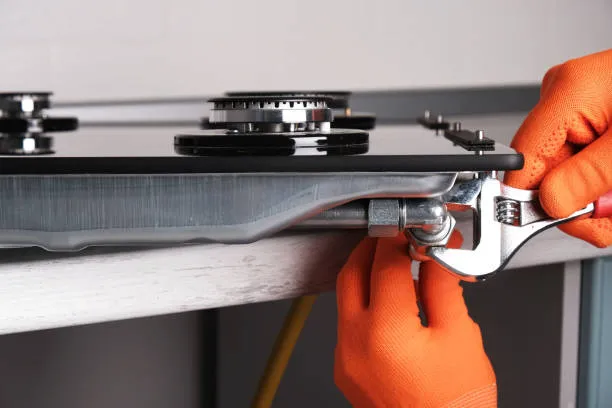
Why DIY Gas Cooker Fitting in London Is Dangerous
Many tutorials show how to fit a gas cooker or fit a gas cooker but skip pressure testing and legal checks required by gas cooker installation regulations.
Even a tiny leak can fill a kitchen with explosive gas in minutes.
DIY also breaches gas cooker fitting regulations and voids insurance.
Real Issues Engineers Find in London Homes
Engineers frequently correct:
- Bayonet not fully locked during connecting a gas cooker
- Twisted hoses during fitting gas cookers
- Missing stability chains
- Cabinets too close to burners
- Old expired hoses reused
These problems are not obvious to homeowners but are common callouts.
Features of a Proper Gas Cooker Installation
A compliant gas cooker installation London service includes:
- BS-approved flexible hose
- Working isolation valve
- Correct cabinet clearance
- Anti-tilt chain fitted
- Full leak and pressure testing
- Legal safety confirmation
Benefits of Professional Gas Cooker Fitting in London
| Benefit | Why It Matters |
|---|---|
| Legal compliance | Avoid penalties |
| Leak-free connection | Prevent fire risk |
| Insurance validity | Required for claims |
| Longer cooker life | Correct pressure setup |
| Household safety | No carbon monoxide risk |
| Peace of mind | Certified work |
Expert Tips from London Gas Engineers
- Never reuse an old gas hose
- Check hose expiry dates
- Keep the isolation valve accessible
- Maintain proper cabinet clearance
- Install a carbon monoxide alarm nearby
- Keep the cooker perfectly level
Common Mistakes People Make
- Attempting to connect the hose themselves
- Buying non-approved hoses online
- Blocking ventilation gaps with cabinets
- Forgetting the stability chain
- Not checking gas type compatibility
FAQ – Connecting and Fitting a Gas Cooker in London
Can I fit a gas cooker myself in London?
You can position it, but gas cooker fitting to the supply must be done by a Gas Safe engineer.
How do you connect a gas cooker safely?
Following gas cooker connection standards with leak and pressure testing.
What is a bayonet fitting?
Used in most homes and covered by gas cooker bayonet fitting regulations.
How long does fitting take?
Usually 30–60 minutes for standard bayonet connections.
Is a stability chain required?
Yes, it is a safety requirement.
Can any plumber fit a gas cooker?
Only plumbers registered with Gas Safe can do this legally.
Do I receive proof of safe installation?
Yes, confirmation is provided after testing.
When to Book a Gas Cooker Installation in London
- New cooker delivery
- Kitchen renovation
- Replacing an old cooker
- Smell of gas behind the appliance
- Moving into a new London property
Book a certified engineer here:
Gas Hob Installation London
Conclusion
Understanding how to fit a gas cooker in London means knowing where preparation ends and regulated gas work begins. Safe connecting a gas cooker London requires professional testing, compliance, and certification that only Gas Safe engineers can provide.
For safe, legal, and expert gas cooker fitting anywhere in London, visit:
Gas Hob Installation London