
Every year, thousands of London homeowners and landlords face the same decision during a kitchen renovation or appliance upgrade: should you go with a built-in gas hob or stick with a freestanding gas cooker? It sounds straightforward, but get it wrong and you are looking at expensive remedial work, failed landlord gas safety checks, or worse — a carbon monoxide risk that puts your household in danger.
This guide cuts through the confusion. Whether you are upgrading an old gas cooker to a hob, replacing a broken appliance, or planning a full kitchen refit in a London flat, you will find everything here: real installation costs, UK gas regulations, ventilation requirements, and an honest comparison of both options — written from the perspective of engineers who fit these appliances in London properties every week.
What Is the Difference Between a Gas Hob and a Gas Cooker?
Before comparing costs and regulations, it helps to be clear on what each appliance actually is.
A freestanding gas cooker is a self-contained unit — hob and oven in one body — that sits on the floor and slots between kitchen units. It connects via a flexible gas hose and bayonet fitting, making it relatively easy to disconnect and replace.
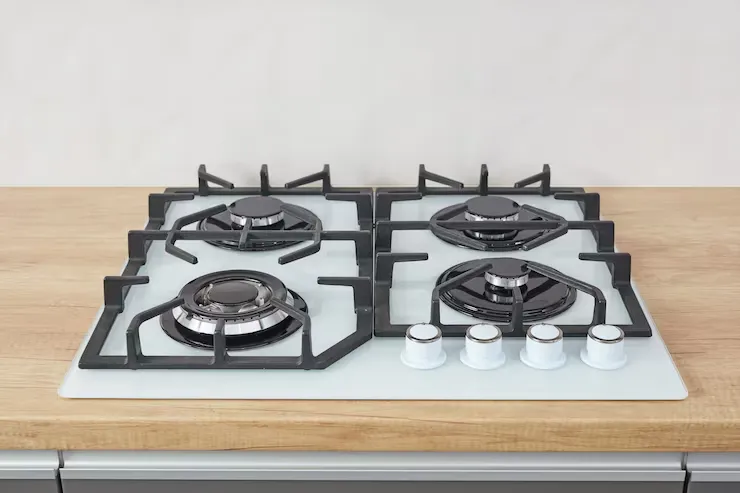
A built-in gas hob is fitted directly into a kitchen worktop cut-out. It connects to the gas supply pipe via a rigid or semi-rigid connection and typically sits above a separate electric or gas oven. It is the appliance of choice in modern kitchen layouts across North London, South London, and beyond.
Both require a Gas Safe engineer to install legally in the UK. There are no exceptions to this.
Gas Hob Installation Cost in London: What to Expect
How much does it cost to install a gas hob in London?
Gas hob installation costs in London typically range from £120 to £280, depending on the complexity of the job. Here is how that breaks down:
| Cost Factor | Typical Range |
|---|---|
| Standard gas hob installation (existing supply) | £120 – £180 |
| Installation with gas pipe extension | £180 – £280 |
| New gas isolation valve fitting | £50 – £90 additional |
| Gas tightness test and certification | Included or £30 – £60 extra |
| Gas Safe certificate for hob | Often included |
Factors that push costs higher in London include:
- Gas pipe connection for hob that needs rerouting or extending (common in older Victorian properties)
- Working in tight kitchen worktop cut-out spaces
- Upgrading the gas supply pipe to accommodate a higher-BTU burner hob
- Emergency gas shut off valve installation where none currently exists
Gas Cooker Installation Cost in London: What to Expect
How much does it cost to install a gas cooker in London?
Gas cooker fitting in London typically costs £100 to £220. Freestanding units are generally cheaper to install than built-in hobs because the gas pipe connection for the cooker is more accessible and the flexible gas hose and bayonet fitting system makes connection simpler.
| Cost Factor | Typical Range |
|---|---|
| Standard gas cooker connection (existing point) | £100 – £150 |
| New gas cooker connection (no existing point) | £180 – £280 |
| Gas pressure test after installation | Included |
| Landlord gas safety check (CP12 certificate) | £60 – £120 |
| Gas appliance disconnection of old unit | £40 – £80 additional |
For London landlords, a CP12 certificate (formally called the Gas Safe certificate) is a legal requirement every 12 months. Whether you have a gas cooker or gas hob, this annual landlord gas safety check cannot be skipped.
Gas Hob vs Gas Cooker: Full Comparison Table
| Factor | Gas Hob | Gas Cooker |
|---|---|---|
| Installation type | Built-in (worktop cut-out) | Freestanding |
| Average install cost in London | £120 – £280 | £100 – £220 |
| Gas connection type | Rigid or semi-rigid pipe | Flexible gas hose + bayonet |
| Ease of disconnection | Moderate (shut isolation valve) | Easy (bayonet disconnect) |
| Kitchen aesthetic | Modern, seamless | Traditional, practical |
| Ventilation requirements | Mandatory extraction | Mandatory extraction |
| Flame failure device required | Yes | Yes |
| Suitable for London flats | Yes (with correct worktop) | Yes (needs clearance space) |
| Best for landlords | Yes (lower fault risk) | Yes (easy replacement) |
| Gas Safe engineer required | Yes | Yes |
| Typical gas hob replacement cost | £120 – £280 | £100 – £220 |
UK Gas Regulations: What London Homeowners Must Know
Gas Hob Regulations UK
Under the Gas Safety (Installation and Use) Regulations 1998, all gas appliance installation work in domestic properties must be carried out by a Gas Safe Register registered engineer. This applies whether you are fitting a new built-in hob in a West London townhouse or replacing an older unit in an East London flat.
Key gas hob regulations in the UK include:
- A flame failure device must be present on all modern gas hobs. This shuts the gas supply automatically if a flame goes out — critical for preventing a gas leak.
- Adequate ventilation requirements for the kitchen must be met. Natural ventilation (openable window) may suffice for small appliances, but mechanical extraction is strongly recommended and may be required in fully enclosed kitchens.
- A gas tightness test must be carried out after every installation, without exception.
- The gas isolation valve must be accessible without moving the appliance.
Gas Cooker Regulations UK
The same Gas Safety Regulations apply. Additionally:
- Freestanding gas cookers must have a minimum clearance of 600mm from any combustible material on either side unless a flame-rated separator is used.
- The flexible gas hose must comply with BS 669 and must not be kinked, stretched, or hidden inside cabinetry where it cannot be visually inspected.
- Annual landlord gas safety checks are legally required for all rented properties — the CP12 certificate covers the cooker and all other gas appliances.
Can You Replace a Gas Cooker with a Gas Hob?
Yes — and it is one of the most common kitchen renovation gas appliance upgrades in London properties right now. Homeowners who are upgrading old gas cookers to hobs are doing so primarily for aesthetic reasons (the seamless worktop look) and to pair the hob with a separate high-performance oven.
However, the process involves more than a straight swap. Here is what a Gas Safe engineer will need to assess:
- Kitchen worktop cut-out size — The worktop must be cut to the hob manufacturer’s specification. Standard sizes are 560mm x 490mm but this varies.
- Gas supply pipe extension — The existing gas point for the cooker may not be in the right position for a built-in hob. Pipe rerouting is common.
- Gas pipe connection for hob — A new semi-rigid connection is typically required, with an accessible gas isolation valve.
- Ventilation reassessment — Depending on the hob’s BTU output, the kitchen may need upgraded mechanical extraction to meet ventilation requirements.
- Gas tightness test — Mandatory after any change to the gas pipework or appliances.
At https://gashobinstallationlondon.co.uk/, this full assessment is included as standard before any installation begins.
Who Can Legally Install a Gas Cooker or Hob in London?
Only a Gas Safe Register registered engineer. Full stop.
This is one of the most important things to understand about UK gas installation laws. It is illegal for an unregistered person to carry out gas fitting work in the UK — including gas hob installation or gas cooker fitting — whether in a London flat, a Greater London terraced house, or a commercial kitchen.
Before any engineer starts work, ask to see their Gas Safe ID card. The card will show their registration number and the specific types of gas work they are licensed to carry out. You can also verify any engineer’s credentials directly on the Gas Safe Register website.
Never hire someone who offers a cash-in-hand gas job with no paperwork. Beyond the legal risk, you will have no gas appliance safety compliance documentation — which creates serious problems at the point of sale or during a tenancy inspection.
Gas Hob vs Gas Cooker: Which Is Safer?
Both appliances carry comparable risk profiles when properly installed by a Gas Safe engineer. The real safety factors are:
Flame failure device (FFD): All new gas hobs and most current gas cookers sold in the UK include this as standard. It is non-negotiable. A gas appliance without a flame failure device poses a serious carbon monoxide risk and should be replaced.
Ventilation: Gas combustion consumes oxygen and produces combustion gases. Kitchen gas appliance fitting regulations require that every gas appliance in a domestic kitchen has adequate ventilation — either natural (a permanently open vent or openable window) or mechanical extraction. Failure here is one of the most common causes of carbon monoxide incidents in London flats, particularly in modern, well-sealed new-build properties.
Flexible gas hose condition: On freestanding cookers, the flexible gas hose should be inspected annually. A cracked, kinked, or aged hose is a significant gas leak risk.
Gas tightness test: After every installation or reconnection, a gas pressure test must confirm there are no leaks anywhere in the system. This is not optional — it is a mandatory step in gas appliance commissioning.
Common Mistakes London Homeowners Make with Gas Appliances
1. Buying the appliance before checking the gas supply position The gas point in your kitchen may not be in the right place for a built-in hob. Always have a Gas Safe engineer survey the kitchen first.
2. Assuming a like-for-like swap needs no certification Every gas appliance connection — even replacing an identical model — requires a gas tightness test and should come with documentation.
3. Using an unregistered fitter to save money This is not just illegal. It invalidates home insurance policies and creates serious liability for landlords.
4. Ignoring ventilation after fitting a higher-output hob Upgrading to a 4-burner or 5-burner high-BTU hob changes the combustion load. The ventilation assessment must be redone.
5. Not checking the flexible gas hose on a second-hand cooker Second-hand gas cookers often come with hoses well past their safe service life. The hose should always be replaced at the point of installation.
Expert Tips for Gas Appliance Installation in London Properties
- Always request a written quote that specifies whether a gas tightness test and Gas Safe certificate are included.
- In older London properties (pre-1970s), the gas pipework may be undersized for modern appliances. Ask your engineer to assess gas pressure before selecting an appliance.
- For London landlords, combine your gas cooker or hob installation with your annual CP12 landlord gas safety check to save a call-out fee.
- For kitchen renovations in London flats, coordinate the hob installation with your worktop fitter — the cut-out must be made before the hob can be fitted.
- In North London, South London, East London, and West London, local council building regulations may require notification for significant gas supply pipe extensions. Your Gas Safe engineer should advise on this.
Frequently Asked Questions
Do I need a Gas Safe engineer to fit a gas hob?
Yes. Under the Gas Safety (Installation and Use) Regulations 1998, all gas hob installation work in the UK must be carried out by a Gas Safe Register registered engineer. It is illegal for any unregistered person to carry out this work, regardless of experience.
How much does gas hob installation cost in London?
Gas hob installation in London typically costs between £120 and £280 depending on whether existing gas pipework is in the right position. If a gas supply pipe extension or new isolation valve is required, costs rise accordingly.
Can I replace a gas cooker with a gas hob myself?
No. Gas appliance disconnection and reconnection is notifiable gas work under UK law and must only be done by a Gas Safe engineer. Attempting this yourself is illegal and dangerous.
What is a gas tightness test and is it required?
A gas tightness test (also called a gas pressure test) checks the entire gas system for leaks after any gas connection work. It is mandatory after every gas appliance installation or reconnection in the UK.
What is a CP12 certificate and who needs one?
A CP12 certificate (Landlord Gas Safety Record) is issued after an annual gas safety check in a rented property. It is a legal requirement for all London landlords with gas appliances — including gas hobs and gas cookers — in their properties.
What ventilation do I need for a gas hob in a London kitchen?
Gas hob regulations UK require adequate ventilation in any kitchen where a gas appliance is fitted. This means either a permanent ventilation opening or a mechanical extraction system (extractor fan or cooker hood) with sufficient extraction rate for the appliance’s BTU output.
Gas hob vs gas cooker — which is better for London flats?
Both work well in London flats. Gas hobs suit modern fitted kitchens and open-plan layouts. Freestanding gas cookers are easier and cheaper to replace and suit traditional or rental kitchens. The right choice depends on your kitchen layout, budget, and whether you are an owner-occupier or landlord.
How long does gas hob or gas cooker installation take?
A standard installation takes 1 to 3 hours for a like-for-like replacement. Installations involving gas pipe extension, new isolation valves, or worktop modifications may take a full day.
Conclusion: Make the Right Choice for Your London Kitchen
Both gas hobs and gas cookers are excellent choices for London homes — the right answer depends on your kitchen design, budget, property type, and whether you are an owner or landlord. What never changes is this: the installation must be done by a registered Gas Safe engineer, with a gas tightness test completed and proper documentation issued.
Cutting corners on gas appliance safety in a London property is not worth it. The legal, financial, and personal consequences are severe.
Whether you need a gas hob fitting in West London, a gas cooker connection in South London, or a full kitchen gas appliance installation anywhere across Greater London, the team at https://gashobinstallationlondon.co.uk/ are Gas Safe registered engineers with real experience across all types of London properties — from Victorian terraces to modern new-build flats.
Get a transparent, fixed-price quote before any work begins, with certification included as standard.