
Installing a gas hob in the UK is not just about connecting a kitchen appliance and turning on the gas supply. Strict gas hob installation regulations exist to protect homes from gas leaks, carbon monoxide exposure, fire hazards, and unsafe gas appliance connections. Many homeowners only realise the importance of proper installation after facing failed safety inspections, poor burner performance, or dangerous gas faults.
Whether you are replacing an old gas hob, planning a kitchen renovation, or fitting a brand-new built in gas hob installation, understanding UK gas hob safety regulations is essential. This guide explains the legal requirements, ventilation rules, clearance distances, Gas Safe obligations, electrical standards, and safety checks required for compliant gas hob installation UK standards.
At Gas Hob Installation London, certified engineers regularly handle domestic gas installation projects across London, helping homeowners stay compliant with UK gas appliance safety standards while ensuring efficient and safe appliance performance.
What Are Gas Hob Installation Regulations?
Gas hob installation regulations are UK safety rules designed to ensure gas appliances operate safely and efficiently inside residential properties. These regulations cover:
- Gas supply connection
- Appliance positioning
- Ventilation in kitchen spaces
- Clearance from combustible materials
- Gas pressure testing
- Electrical connections
- Safety inspection after installation
- Compliance with Building Regulations and Gas Safety Regulations
The most important legal requirement is that all gas work involving gas pipework, gas supply connections, or appliance fitting must be completed by a qualified Gas Safe Register engineer.
Improper installation can lead to:
- Gas leaks
- Carbon monoxide safety risks
- Fire hazards
- Invalid home insurance
- Unsafe burner operation
- Failed landlord safety inspections
Do You Need a Gas Safe Engineer to Install a Gas Hob?
Short Answer: Yes
Under UK law, any gas appliance installation involving gas pipe regulations UK standards must be completed by a qualified Gas Safe registered engineer.
Why This Matters
A professional gas engineer performs:
- Gas leak detection
- Appliance testing
- Burner efficiency checks
- Gas pressure testing
- Safe gas supply connection
- Ventilation assessment
- Isolation valve inspection
- Emergency gas control valve testing
Can I Install a Gas Hob Myself in the UK?
Homeowners are legally allowed to perform certain DIY tasks in their property, but gas work involving appliance connections is heavily restricted. Attempting DIY gas hob fitting regulations work without certification creates serious safety and legal risks.
Unqualified installation may result in:
- Unsafe gas connections
- Carbon monoxide leaks
- Invalid manufacturer warranty
- Non-compliance with gas hob compliance UK requirements
- Failed property inspections during sale or rental
For this reason, certified gas hob installation service providers are strongly recommended.
Main Legal Requirements for Gas Hob Installation
1. Gas Safe Registration
Every engineer working on a natural gas hob installation or LPG gas hob installation must be registered with the Gas Safe Register.
This is the legal replacement for CORGI certification in the UK.
2. Proper Ventilation
Gas appliances require sufficient airflow for safe combustion.
Gas hob ventilation requirements UK standards usually include:
- Openable windows
- Mechanical extraction
- Kitchen extractor fan systems
- Adequate room volume
Poor ventilation increases the risk of carbon monoxide buildup.
3. Correct Appliance Clearance
Minimum clearance required for a gas hob depends on the manufacturer installation guidelines and UK regulations.
Typical gas hob clearance requirements include:
| Area | Minimum Clearance |
|---|---|
| Hob to extractor hood | 650mm–750mm |
| Hob to overhead cabinets | 760mm |
| Side clearance from combustible surfaces | 50mm–150mm |
| Rear wall clearance | Manufacturer dependent |
Always follow appliance-specific instructions.
4. Safe Gas Pipework
Gas pipe regulations UK standards require:
- Secure pipe connections
- Proper isolation valve installation
- Approved flexible gas hose usage
- Pressure-tight connections
- Accessible emergency shut-off access
5. Electrical Compliance
Modern gas hobs often include ignition systems that require electrical connections.
Gas hob electrical requirements may include:
- Fused spur connection
- Proper earthing
- Accessible isolation switch
- Protection from heat exposure
Gas Hob Installation Requirements for Built-In Kitchens
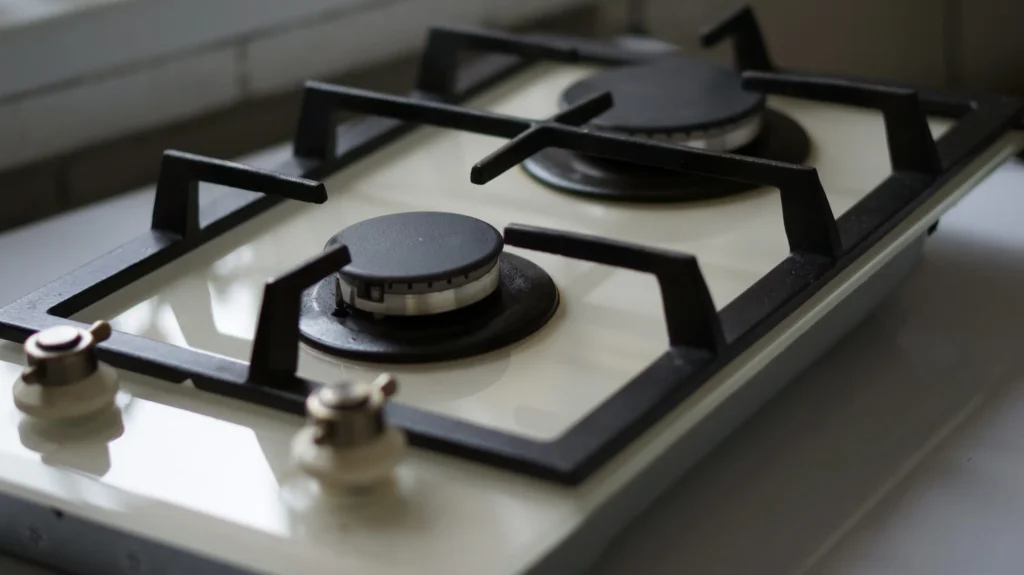
Built in gas hob installation projects require additional planning because integrated kitchen appliances are installed into worktops and cabinetry.
Key Safety Requirements
Heat Resistant Surfaces
Kitchen units near the appliance must withstand heat exposure.
Ventilation Gaps
Proper airflow around the appliance prevents overheating.
Safe Appliance Positioning
The hob should never sit too close to:
- Curtains
- Wooden panelling
- Plastic surfaces
- Electrical sockets
Combustible Materials Clearance
Maintaining safe distances reduces fire risk.
Step-by-Step Process for Installing a Gas Hob
Step 1: Appliance Inspection
The engineer checks:
- Appliance condition
- Gas type compatibility
- Manufacturer installation guidelines
- Existing pipework
Step 2: Isolation of Gas Supply
The gas supply is safely isolated before any work begins.
Step 3: Removal of Existing Appliance
Old gas hobs are disconnected and inspected for hidden faults.
Step 4: Gas Connection
The new hob is connected using approved fittings and flexible gas hose components where permitted.
Step 5: Pressure Testing
Gas pressure testing confirms there are no leaks in the system.
Step 6: Ventilation and Clearance Checks
The engineer confirms gas hob ventilation requirements and spacing rules comply with regulations.
Step 7: Appliance Testing
The installer checks:
- Ignition system
- Burner flames
- Flame failure device
- Gas pressure
- Stability of burners
Step 8: Final Safety Inspection
A full gas hob fitting and safety inspection is completed before sign-off.
Gas Hob Ventilation Requirements UK
Ventilation in kitchen spaces plays a major role in gas appliance safety standards.
Why Ventilation Matters
Gas burners consume oxygen and produce combustion gases. Without proper ventilation:
- Carbon monoxide can accumulate
- Flame performance drops
- Excess heat damages cabinetry
- Moisture buildup increases
Recommended Ventilation Methods
| Ventilation Type | Purpose |
|---|---|
| Kitchen extractor fan | Removes heat and gases |
| Openable windows | Provides natural airflow |
| Wall vents | Improves continuous ventilation |
| Cooker hood extraction | Captures combustion byproducts |
For larger hobs or enclosed kitchens, stronger extraction systems may be necessary.
Gas Hob Installation Rules for Landlords
Landlords have additional legal obligations under UK gas safety laws.
Landlord Responsibilities
Landlords must:
- Arrange annual gas safety inspections
- Use Gas Safe registered engineers
- Maintain gas appliances safely
- Provide tenants with a gas safety certificate
Failure to comply can lead to:
- Heavy fines
- Insurance issues
- Legal action
- Tenant safety risks
Natural Gas vs LPG Gas Hob Installation
Not all gas hobs operate on the same fuel type.
| Feature | Natural Gas Hob Installation | LPG Gas Hob Installation |
|---|---|---|
| Fuel Source | Mains gas supply | Bottled gas |
| Pressure Settings | Lower pressure | Higher pressure |
| Injector Size | Larger | Smaller |
| Installation Needs | Standard domestic supply | LPG conversion kit |
| Common Locations | Urban homes | Rural properties |
Incorrect gas type setup creates major safety risks.
Common Mistakes During Gas Hob Installation
Using Non-Certified Installers
Unqualified installers often skip critical gas hob safety checks.
Ignoring Clearance Requirements
Poor spacing increases heat damage and fire hazards.
Poor Ventilation Planning
Insufficient airflow causes unsafe combustion.
Incorrect Burner Setup
Wrong injector sizing affects flame quality and burner efficiency.
Failing to Test for Leaks
Gas leak detection must always be performed after installation.
Safety Features Every Modern Gas Hob Should Have
Modern gas hobs include advanced safety systems designed to reduce household risk.
Flame Failure Device
Cuts off the gas supply when flames extinguish unexpectedly.
Automatic Ignition System
Provides safer burner ignition.
Emergency Isolation Valve
Allows quick gas shut-off during emergencies.
Stable Burner Supports
Reduces pan instability and accidental spills.
Regulations for Replacing an Old Gas Hob
Replacing an old gas hob still requires professional installation.
Many homeowners assume a simple swap does not require a Gas Safe engineer. This is incorrect because the work still involves:
- Disconnecting gas supplies
- Testing pipework
- Pressure testing
- Appliance certification
- Safety inspection after installation
Older kitchens may also fail current gas hob compliance UK standards and need upgrades.
Gas Hob Installation Cost in London
Prices vary depending on:
- Appliance type
- Existing pipework condition
- Ventilation upgrades
- Electrical modifications
- LPG conversion requirements
Typical London Price Ranges
| Service | Average Cost |
|---|---|
| Basic gas hob replacement | £80–£150 |
| New gas hob installation | £150–£350 |
| Pipework modifications | £100–£400 |
| Ventilation upgrades | £150–£600 |
Certified installation helps prevent expensive repairs later.
Benefits of Professional Gas Hob Installation
Safer Home Environment
Professional fitting reduces risks from gas leaks and carbon monoxide exposure.
Full Regulatory Compliance
Certified work meets UK gas appliance installation standards.
Better Appliance Performance
Correct burner setup improves cooking efficiency.
Insurance Protection
Insurers often require proof of compliant gas appliance installation.
Manufacturer Warranty Protection
Many warranties become invalid after DIY fitting.
Expert Tips for Safe Kitchen Gas Hob Installation
Always Check Manufacturer Instructions
Every appliance has unique clearance and ventilation requirements.
Choose Proper Extraction
A quality kitchen extractor fan improves air quality and safety.
Never Block Ventilation Openings
Restricted airflow creates dangerous combustion conditions.
Keep Isolation Valves Accessible
Quick access matters during emergencies.
Schedule Routine Gas Safety Checks
Annual inspections identify hidden issues early.
Frequently Asked Questions
Can I legally install a gas hob myself in the UK?
Gas appliance installation involving gas connections should only be completed by a qualified Gas Safe registered engineer. DIY installation creates serious legal and safety risks.
Does a gas hob need to be installed by a Gas Safe engineer?
Yes. UK gas safety regulations require certified engineers for gas hob fitting, gas supply connection, and appliance testing.
What are the ventilation requirements for a gas hob?
Gas hobs require adequate ventilation through windows, extractor fans, or mechanical ventilation systems to safely remove combustion gases and maintain air quality.
How much clearance is required around a gas hob?
Clearance varies by manufacturer, but standard UK guidelines usually require at least 650mm between the hob and extractor hood, plus safe spacing from combustible materials.
Do I need a certificate after installing a gas hob?
A professional installer may provide installation documentation or safety records confirming the appliance was tested and installed safely.
What safety checks are completed after gas hob installation?
Engineers perform gas leak detection, burner testing, pressure testing, ignition checks, ventilation assessment, and flame failure device inspection.
Can a gas hob be installed under a window?
Yes, but careful assessment is needed to ensure curtains, airflow, and combustible materials do not create safety hazards.
What happens during a gas hob safety inspection?
The engineer checks gas tightness, ventilation, burner performance, pipework condition, appliance positioning, and overall compliance with UK regulations.
Final Thoughts on Gas Hob Installation Regulations
Gas hob installation regulations exist for one reason: safety. Proper installation protects homes from gas leaks, fire hazards, and carbon monoxide exposure while ensuring your appliance performs efficiently for years.
Whether you need a built in gas hob installation, gas cooker replacement, LPG gas hob installation, or complete kitchen gas appliance setup, certified installation remains essential for legal compliance and household safety.
Professional engineers understand gas hob fitting regulations, ventilation requirements, gas pressure testing, appliance positioning, and compliance standards that most homeowners never see.
For trusted advice and certified gas hob installation UK services, visit Gas Hob Installation London and arrange a professional inspection or installation service.