
Every year, London landlords face fines, prosecution, and invalidated insurance policies — not because they intended to cut corners, but because they didn’t fully understand their legal obligations around gas appliance installation. A gas hob seems straightforward enough: swap out the old one, connect the new one, job done. But in a rental property, that approach can land you in serious legal and financial trouble.
This guide covers everything you need to know about gas hob installation in rental properties — from UK law and Gas Safe requirements to certification, ventilation, and what happens before a tenant moves in.
Why Gas Hob Installation in Rental Properties Is a Legal Matter
As a landlord, you carry a duty of care to every tenant who lives in your property. The Gas Safety (Installation and Use) Regulations 1998 — the primary piece of UK gas safety law — make it a criminal offence to have gas work carried out by anyone who is not Gas Safe registered. This is not a guideline. It is the law, and failure to comply can result in fines of up to £6,000 per offence, imprisonment, or both.
The Health and Safety Executive (HSE) enforces these regulations and has the authority to prosecute landlords, letting agents, and anyone else found to have commissioned or permitted illegal gas appliance installation.
By law, landlords must ensure that all gas appliances — including gas hobs — are installed, maintained, and checked by a qualified Gas Safe registered engineer. This applies whether you’re installing a brand-new hob in a newly refurbished kitchen or replacing an old appliance in a property that’s already tenanted.
Who Can Install a Gas Hob in a Rental Property?
Only a Gas Safe registered engineer can legally carry out gas hob installation in a rental property in the UK. This applies to every stage of the process: connecting the appliance to the mains gas supply, fitting any new gas pipework, installing a gas isolation valve, and commissioning the hob once it’s in place.
The Gas Safe Register is the official list of engineers who are legally permitted to work on gas appliances in Great Britain. Every registered engineer carries a Gas Safe ID card showing their registration number and the specific types of gas work they are qualified to undertake.
Before any work begins, always ask to see the engineer’s Gas Safe ID card. You can also verify registration online at the official Gas Safe Register website. Do not rely solely on a company’s word — individual engineers must hold their own registration.
Can a landlord install a gas hob without Gas Safe?
Absolutely not. Even if a landlord has a background in construction or has fitted appliances before, carrying out gas work without Gas Safe registration is illegal. The risk extends beyond legal liability: an incorrectly fitted gas hob can cause carbon monoxide poisoning, gas leaks, or fire — all of which can be fatal.
Legal Requirements for Gas Hob Installation in a Rented Property
Understanding what the law actually requires will help you manage your rental property responsibly and avoid costly mistakes.
The Gas Safety (Installation and Use) Regulations 1998
These regulations set out the responsibilities of landlords, engineers, and gas suppliers. Under these regulations, all gas fittings and appliances must be installed and maintained to a standard that prevents danger to people or property. As a landlord, you are specifically required to ensure gas appliances are safe before a new tenancy begins and throughout the tenancy.
Building Regulations Part J
Building Regulations Part J covers combustion appliances and fuel storage systems. It includes requirements for adequate air supply, safe discharge of products of combustion, and protection against fire. Any gas hob installation must comply with these standards, which is another reason why qualified professional installation is essential — a Gas Safe engineer will ensure compliance automatically.
Gas Appliance Commissioning
Once a gas hob is physically installed, it must be commissioned. Commissioning involves testing the appliance to ensure it operates correctly and safely. This includes a gas tightness test on the installation pipework, a gas rate test to confirm the appliance is receiving the correct flow, and operational checks on all burners and controls.
Without proper commissioning, you have no evidence that the appliance is safe to use — and no protection if something goes wrong.
Gas Isolation Valve Installation
Every gas appliance must have a dedicated gas isolation valve installed nearby. This allows the appliance to be isolated quickly in an emergency without shutting off gas to the entire property. Your Gas Safe engineer will confirm whether an existing isolation valve is in place or whether a new one needs to be fitted as part of the installation.
The Gas Hob Installation Process: Step by Step
Here’s what a professional gas hob installation in a rental property should involve from start to finish.
Step 1: Site assessment. The engineer will inspect the existing kitchen setup, check the location of the gas supply, assess existing pipework, and confirm whether the chosen appliance is compatible with the gas supply type (natural gas or LPG).
Step 2: Gas isolation. The gas supply to the relevant section is isolated before any work begins.
Step 3: Removal of the old appliance. The existing hob — whether gas or electric — is disconnected and removed safely.
Step 4: Pipework installation or modification. Gas hob pipework is run or extended as needed to serve the new appliance location. Any new pipework must be properly supported, protected, and tested.
Step 5: Appliance connection. The new gas hob is connected to the supply using a rigid or flexible connection as appropriate. The engineer will check the appliance data badge to confirm the correct operating pressure.
Step 6: Gas tightness testing. A gas tightness test is carried out on the completed installation to confirm there are no leaks. This is non-negotiable — no reputable engineer will skip it.
Step 7: Commissioning and gas rate test. The appliance is turned on, checked for correct operation, and a gas rate test confirms the appliance is burning at the correct rate.
Step 8: Documentation. The engineer completes an installation certificate confirming the work meets regulatory standards.
Ventilation Requirements for Gas Hobs in Rental Properties
Proper ventilation is required wherever a gas hob is installed. Gas combustion produces carbon dioxide, water vapour, and — when combustion is incomplete — carbon monoxide. Adequate ventilation removes these by-products and ensures fresh air is available for the burners to function correctly.
Flue and ventilation standards are set out in Building Regulations Part J and British Standard BS 6172, which specifically covers the installation of domestic gas cooking appliances.
In practice, ventilation requirements depend on the kitchen’s design and the total heat input of the appliance. Most modern kitchens with an openable window and an extract fan will meet the minimum requirements for a standard domestic gas hob. However, for open-plan kitchens or high-BTU range-style hobs, additional ventilation assessment may be required.
Your Gas Safe engineer will carry out the necessary checks and advise on any additional ventilation requirements as part of the installation process.
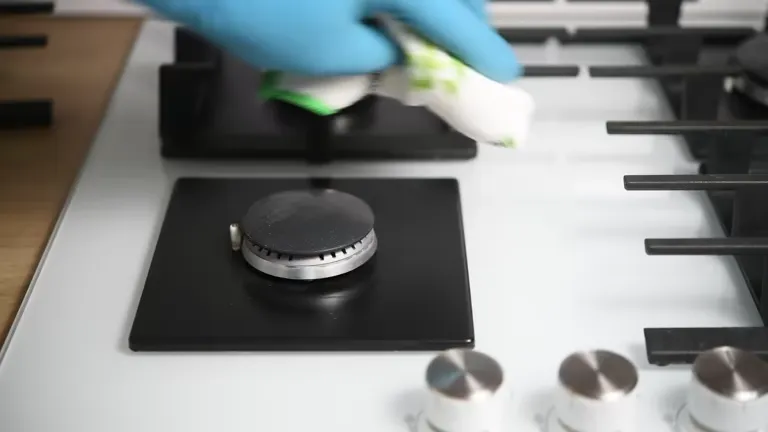
Replacing an Electric Hob with a Gas Hob in a Rental Property
This is one of the more complex installation scenarios because it requires connecting to mains gas where no gas connection previously existed in the kitchen.
How to replace an old gas hob or fit a new one in a kitchen that currently has an electric hob involves several additional steps: a gas supply must be extended to the kitchen, a suitable gas isolation valve must be installed, and the new pipework must meet current standards throughout.
This type of work requires careful planning, especially in rental properties where disruption to tenants must be managed. Always give tenants appropriate notice of planned works and ensure the property is safe and habitable throughout.
Gas Hob Installation Certificate: What Landlords Must Provide
After installation, a gas appliance installation certificate must be issued by the Gas Safe registered engineer. This document confirms the appliance was installed to the required standard and that gas tightness testing was completed successfully.
This certificate forms part of your property’s safety documentation and should be retained throughout the tenancy. It may be requested by your insurer, a letting agent, or a court in the event of a dispute or incident.
In addition to the installation certificate, landlords are required to obtain a CP12 certificate — the landlord gas safety certificate — for all gas appliances in the property. The landlord gas safety certificate must be renewed annually by a Gas Safe registered engineer. Before a tenant moves in, you must have a valid CP12 certificate in place and provide a copy to the tenant within 28 days of the annual check.
Documents landlords must provide after gas hob installation:
- Gas appliance installation certificate
- CP12 landlord gas safety certificate (renewed annually)
- Any relevant Building Regulations compliance documentation
Gas Hob Safety Regulations: Clearance and Positioning
Gas hob clearance regulations set out minimum distances that must be maintained between the hob and surrounding surfaces, cabinets, and overhead structures. These requirements exist to prevent ignition of nearby materials and ensure the appliance operates safely.
As a general guide:
- A minimum clearance of 650mm is typically required between the hob surface and any overhead cupboard or extractor hood (check manufacturer specifications for the specific appliance).
- Side clearances must allow for safe operation and access.
- Combustible surfaces adjacent to or below the hob must be appropriately protected.
Your Gas Safe engineer will confirm exact clearance requirements based on the specific appliance being fitted and the kitchen layout.
Comparison Table: Gas Hob Installation Scenarios in Rental Properties
| Scenario | Complexity | Gas Safe Required | CP12 Required | Estimated Cost Range (London) |
|---|---|---|---|---|
| Like-for-like gas hob replacement | Low | Yes | Yes | £150–£300 |
| Gas hob replacement with new pipework | Medium | Yes | Yes | £300–£600 |
| Electric to gas hob conversion | High | Yes | Yes | £500–£1,200+ |
| New gas hob in new-build kitchen | Medium–High | Yes | Yes | £400–£900 |
| Gas hob with isolation valve replacement | Low–Medium | Yes | Yes | £200–£400 |
Costs are indicative and vary based on property specifics, access, and materials. Always obtain a written quote before work begins.
Penalties for Illegal Gas Appliance Installation
The consequences of commissioning or permitting illegal gas work in a rental property are severe.
Criminal prosecution. Under the Gas Safety (Installation and Use) Regulations 1998, landlords can be prosecuted and face unlimited fines or up to two years in prison.
Landlord liability. Under the Landlord and Tenant Act and associated case law, landlords bear liability for harm caused by unsafe appliances in their properties. In the event of a gas-related incident — a carbon monoxide risk incident, fire, or explosion — a landlord who cannot demonstrate compliance with gas safety law will face civil liability as well as criminal exposure.
Insurance invalidation. Most landlord insurance policies contain clauses requiring compliance with all applicable safety regulations. Illegal gas work can invalidate your policy entirely, leaving you unprotected at exactly the moment you need cover most.
Expert Tips: What Experienced London Landlords Do Differently
After years of working with rental property owners across London, here are the practices that separate compliant, well-protected landlords from those who get caught out.
Always use a Gas Safe engineer with rental property experience. Not all Gas Safe engineers are equally familiar with landlord compliance requirements. Choose one who understands CP12 obligations, installation certification, and the specific paperwork trail you need.
Keep a gas safety file for each property. Store all installation certificates, CP12 certificates, and service records together. This makes annual renewals easier and gives you everything you need in one place.
Set calendar reminders for annual gas checks. CP12 certificates expire after 12 months. A lapsed certificate is a criminal offence — treat this deadline the same way you treat mortgage payments.
Don’t let tenants source their own gas engineers. Even with the best intentions, tenants may use unregistered engineers to save money. Your legal obligation as landlord cannot be delegated — the responsibility and liability stay with you.
Get written quotes that specify Gas Safe compliance. Any quote for gas work should explicitly state that the engineer is Gas Safe registered and that the work will include commissioning, gas tightness testing, and certification.
Frequently Asked Questions
Who can install a gas hob in a rental property?
Only a Gas Safe registered engineer can legally install a gas hob in a rental property in the UK. This is a legal requirement under the Gas Safety (Installation and Use) Regulations 1998. Any landlord who uses an unregistered person for gas work faces criminal prosecution, fines, and potential imprisonment.
Do landlords need a Gas Safe engineer for a gas hob?
Yes, without exception. Gas hob installation — including connecting to mains gas, fitting pipework, and commissioning the appliance — must be carried out by a Gas Safe registered engineer. There are no exemptions for landlords, even those with trade backgrounds.
What certificate does a landlord need after gas hob installation?
A landlord needs two documents: a gas appliance installation certificate from the engineer who carried out the work, and a valid CP12 landlord gas safety certificate. The CP12 must be renewed annually and a copy provided to tenants within 28 days of each annual check.
Can a landlord install a gas hob without Gas Safe registration?
No. Carrying out or commissioning gas work without using a Gas Safe registered engineer is a criminal offence under UK gas safety law. Penalties include fines up to £6,000 per offence and up to two years in prison, as well as civil liability for any harm caused.
What is the cost of gas hob installation in London?
The cost of gas hob installation in London typically ranges from £150 for a straightforward like-for-like replacement to £1,200 or more for complex jobs involving electric-to-gas conversion or significant new pipework. Always obtain a written quote that includes commissioning, gas tightness testing, and certification.
What ventilation is required for a gas hob in a rented house?
Gas hobs require adequate ventilation to ensure safe combustion and removal of combustion by-products. In most cases, an openable window and kitchen extract fan are sufficient for a standard domestic gas hob. However, specific ventilation requirements depend on the appliance heat input and kitchen layout, and must be assessed by the installing Gas Safe engineer in accordance with Building Regulations Part J.
What documents must a landlord provide after gas hob installation?
After gas hob installation, landlords must provide: a gas appliance installation certificate confirming the work meets regulatory standards, and a current CP12 landlord gas safety certificate. The CP12 must be renewed every 12 months and given to new tenants before they move in, or within 28 days of each annual renewal.
How often must landlords have gas appliances checked in rental properties?
By law, landlords must arrange an annual gas safety check by a Gas Safe registered engineer covering all gas appliances and pipework in the property. The resulting CP12 certificate must be provided to tenants within 28 days and retained for at least two years.
Conclusion: Get Your Gas Hob Installation Right the First Time
Gas hob installation in a rental property is not something to approach casually. The legal framework is clear, the penalties for non-compliance are serious, and — most importantly — the safety stakes for your tenants are real. Getting it right means using a Gas Safe registered engineer, ensuring the installation is properly commissioned and certified, and maintaining a valid CP12 landlord gas safety certificate at all times.
Whether you’re fitting a replacement hob before a new tenancy, upgrading an existing kitchen, or converting from electric to gas, the process must be handled by a qualified professional who understands both the technical and compliance requirements of rental property gas work.
For landlords across London, Gas hob Installation London provides fully compliant gas hob installation carried out by Gas Safe registered engineers. Every installation includes gas tightness testing, commissioning, and full certification — so you have everything you need to meet your legal obligations and protect your tenants. Get in touch today for a written quote and take the guesswork out of your next gas hob installation.